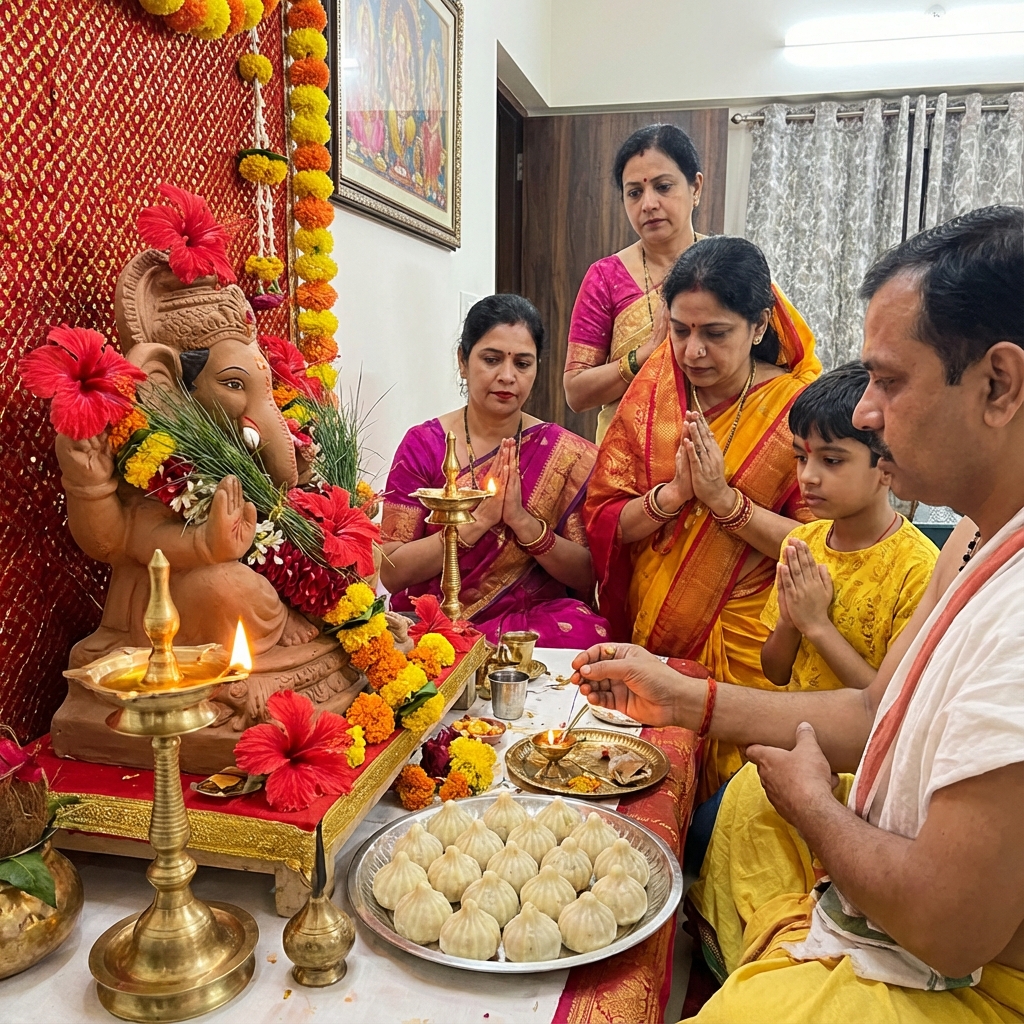
Ketu is the south node of the moon, associated with spirituality, detachment, and past life karma (Prarabdha). While it can lead to enlightenment, an afflicted Ketu or Ketu Mahadasha can cause intense confusion, feeling of isolation, skin diseases, and sudden accidents.
Ketu Dosh Shanti Puja primarily involves worshipping Lord Ganesha, who is the presiding deity of Ketu, to transform the negative energies into spiritual growth.
The Mythology of Ketu: The Headless Body
As explained in the Samudra Manthan legend, when Lord Vishnu severed the demon Svarbhanu with his Sudarshan Chakra, the head became Rahu and the body became Ketu. While Rahu represents the mind and desires, Ketu represents the body and detachment. Ketu is headless, symbolizing a being without ego, intellect, or worldly ambitions.
In Vedic astrology, Ketu is considered the moksha karaka (significator of liberation). It represents past life karma, spiritual wisdom, and the path to enlightenment. However, when afflicted, Ketu creates confusion, isolation, mysterious health issues, and a sense of purposelessness.
Ketu's energy is like a double-edged sword: it can either lead to profound spiritual awakening or cause severe mental and physical suffering. The key is to channel Ketu's energy through proper worship and spiritual practices.
Astrological Significance of Ketu
In Vedic Astrology, Ketu shares many characteristics with Mars but operates on a spiritual plane:
- Zodiac Sign: Co-rules Scorpio and Pisces
- Exaltation: Sagittarius (some texts say Scorpio)
- Debilitation: Gemini (some texts say Taurus)
- Friendly Planets: Mars, Venus, Saturn
- Enemy Planets: Sun, Moon
- Neutral: Mercury, Jupiter
- Mahadasha Period: 7 years
- Direction: Southwest
- Gemstone: Cat's Eye (Lehsunia/Vaidurya)
- Metal: Iron, Lead
- Color: Multi-colored, Smoky
- Day: Tuesday (shares with Mars)
- Deity: Lord Ganesha, Matsya Avatar
Symptoms of Ketu Dosh
When Ketu is afflicted in a horoscope, it creates various challenges:
- Health Issues: Skin diseases (especially allergies and rashes), joint pains, mysterious ailments doctors cannot diagnose, accidents and injuries, viral infections, and chronic fatigue.
- Mental Confusion: Feeling lost in life, inability to focus, spiritual crisis, detachment from family and society, depression, and existential anxiety.
- Career Instability: Sudden job losses, inability to settle in one profession, frequent changes, or working in isolation.
- Relationship Issues: Feeling disconnected from loved ones, difficulty expressing emotions, or attraction to spiritual life over family life.
- Financial Problems: Unexpected losses, difficulty accumulating wealth, or disinterest in material prosperity.
- Spiritual Confusion: Interest in occult or mysticism without proper guidance, attraction to false gurus, or spiritual practices causing mental imbalance.
When is Ketu Dosh Shanti Puja Essential?
The puja becomes critically important in these situations:
- Ketu Mahadasha or Antardasha: The 7-year Ketu period can be extremely challenging without proper remedies
- Ketu in 1st House: Affects physical health, creates identity confusion, and causes accidents
- Ketu in 4th House: Problems with mother, property disputes, and mental peace
- Ketu in 5th House: Issues with children, education, and creative expression
- Ketu in 7th House: Marriage problems, business partnership issues, and relationship detachment
- Ketu in 8th House: Sudden accidents, chronic diseases, and occult troubles
- Ketu in 10th House: Career instability and professional confusion
- Ketu-Mars Conjunction: Increases accident risk and aggressive behavior
- Ketu-Moon Conjunction: Severe mental disturbances and emotional instability
Ketu's Positive Manifestations
When properly propitiated, Ketu can bestow:
- Spiritual Enlightenment: Deep meditation abilities, intuitive wisdom, and moksha (liberation)
- Psychic Abilities: Clairvoyance, healing powers, and understanding of mystical sciences
- Technical Excellence: Success in research, technology, and specialized fields
- Detachment: Freedom from material desires and ego, leading to inner peace
- Past Life Wisdom: Access to past life knowledge and karmic understanding
Ketu Shanti Packages
Basic Shanti
Includes Ketu Mantra Jaap (17,000 chants), Ganesh Puja & Havan.
Complete Dosh Nivaran
Targeted for Ketu Mahadasha. 68,000+ Jaap, Special Havan (Kusha grass).
Samagri List (Multi-Colored)
- Multi-colored Cloth (Chitkabra) or Black
- Seven Grains (Satnaja)
- Coconut, Horse Gram (Kulthi)
- Kusha Grass
- Garlic/Onion (excluded from offering but sometimes donated)
- Silver Serpent (Nag) image
Comprehensive Ketu Dosh Shanti Ritual Vidhi
The Ketu Dosh Shanti Puja centers around Lord Ganesha worship, as He is Ketu's presiding deity. The ritual must be performed with devotion and precision:
Pre-Puja Preparations
- Fasting: Observe a partial fast, consuming only fruits and milk from sunrise.
- Bath: Take a purifying bath and wear clean, preferably multi-colored or white clothes.
- Puja Space: Clean the area and face Southwest (Ketu's direction) or Northeast (Ganesha's direction).
- Timing: Best performed on Tuesday, during Ketu's birth nakshatra, or during Ketu Mahadasha. Consult pandit for Muhurat.
Main Ritual Process
- Ganesh Puja (Primary Ritual):
Since Lord Ganesha is Ketu's deity, this is the most important part. Offer 21 modaks, durva grass, red flowers, and red sandalwood. Chant: "Om Gam Ganapataye Namah" (108 times). This automatically pacifies Ketu.
- Kalash Sthapana:
Install a copper kalash with water, mango leaves, and coconut, representing divine presence.
- Matrika Pujan:
Invoke the seven divine mothers (Saptamatrikas) who protect against Ketu's malefic effects.
- Ketu Yantra Puja:
The Ketu Yantra is consecrated with multi-colored flowers, kusha grass, and offerings of seven grains (satnaja).
- Ketu Mantra Jaap:
The main Ketu mantra is chanted 17,000 times (or multiples thereof):
"Om Stram Streem Straum Sah Ketave Namah"
(Salutations to Ketu, the moksha karaka)Alternative mantras:
- "Om Kem Ketave Namah" - Simple Ketu beej mantra
- "Palasha Pushpa Sankasham..." - Ketu Gayatri mantra
- Kusha Grass Havan:
Special havan with kusha grass (sacred grass), horse gram (kulthi), and seven grains. Each offering made with "Om Ketave Idam Na Mama".
- Daan (Charitable Donations):
Specific donations for Ketu:
- Multi-colored blanket or cloth to the poor
- Horse gram, sesame seeds, and seven grains
- Iron items or lead objects
- Feeding dogs (Ketu's animal)
- Money to spiritual seekers or sadhus
- Brahmin Bhojan:
Feed the pandits with sattvic food to complete the puja cycle.
Post-Puja Observances
- Yantra Installation: Install the Ketu Yantra in the Southwest corner of your home.
- Daily Mantra: Continue chanting "Om Kem Ketave Namah" 108 times daily for 40 days.
- Tuesday Fasting: Observe partial fast on Tuesdays, avoiding salt.
- Spiritual Practice: Engage in regular meditation and spiritual study to channel Ketu's energy positively.
Additional Ketu Remedies and Spiritual Practices
Beyond the puja, these practices help channel Ketu's energy toward spiritual growth:
Daily Spiritual Practices
- Meditation: Practice 20 minutes of meditation daily, focusing on the third eye (Ajna chakra).
- Ganesha Worship: Daily worship of Lord Ganesha with modak and durva grass.
- Cat's Eye Gemstone: Only after astrological consultation, wear a 5-7 carat Cat's Eye in gold on the middle finger.
- Feed Dogs: Regularly feed stray dogs, especially on Tuesdays.
- Visit Ganesha Temples: Weekly visits to Ganesha temples, especially Ashtavinayak temples.
Lifestyle Modifications
- Spiritual Study: Read spiritual texts like Bhagavad Gita, Upanishads, or Buddhist teachings.
- Service: Engage in selfless service (seva) without expectation of reward.
- Detachment Practice: Practice healthy detachment from material outcomes while fulfilling duties.
- Avoid Occult: Don't engage in black magic or negative occult practices.
Health and Dietary Guidelines
- Include horse gram (kulthi dal) in diet once weekly
- Avoid excessive spicy and tamasic foods
- Practice yoga, especially poses that strengthen the spine
- Get regular health checkups to catch issues early
Comprehensive FAQs on Ketu Dosh Shanti
Who is the presiding deity for Ketu, and why is Ganesha worship important?▼
Should I wear Cat's Eye (Lehsunia) gemstone for Ketu Dosh?▼
When is the best time to perform Ketu Dosh Shanti Puja?▼
How is Ketu Dosh different from Kaal Sarp Dosh?▼
Can Ketu Dosh cause skin diseases and allergies?▼
How many times should Ketu Dosh Shanti Puja be performed?▼
What donations (Daan) are most effective for Ketu Dosh?▼
Can Ketu Dosh affect my spiritual life and meditation practice?▼
Are there any precautions during Ketu Dosh Shanti Puja?▼
What is the difference between Ketu Dosh and Ketu Mahadasha?▼
Find Your Path
Turn obstacles into spiritual stepping stones.
Jump to Section
*Book experienced Vedic Pandits for Ketu Dosh Shanti in all localities of Pune and PCMC.